Centers of Excellence
Centers of Excellence actively deliver advanced care to patients with severe ocular surface disease. These centers not only perform sight-restoring procedures but also serve as leading hubs for physician education and clinical innovation, helping to shape the future of this specialized field.
The Foundation has established five Centers of Excellence each actively delivering advanced care to patients with severe ocular surface disease.
Illinois Eye and Ear Infirmary at the University of Illinois Chicago – Chicago, ILLed by Dr. Ali R. Djilian; Established in 2026
Cincinnati Eye Institute / St. Elizabeth Healthcare – Edgewood, KYEstablished in 2021 by Dr. Edward J. Holland (Inaugural Center)
UC Irvine Gavin Herbert Eye Institute – Irvine, CALed by Dr. Marjan Farid; Established in 2023
Virginia Eye Consultants – Norfolk, VALed by Dr. Albert Cheung; Established in 2023
Mass Eye and Ear, Mass General Bingham, a teaching hospital of Harvard Medical School – Boston, MALed by Dr. Thomas Dolman; Established in 2024
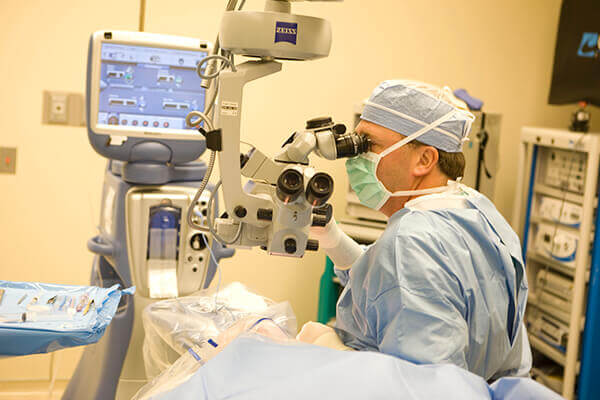
“We have the opportunity with Dr. Holland and his protocols, and the few other doctors across the country who utilize them, to really make a difference and give the gift of sight to these patients. I challenged Dr. Holland to make a difference, so we developed a team, a board of directors and a foundation that will take this ball and run with it.”
Robert J. Dempsey, Co-Founder of The Holland Foundation for Sight Restoration.
The Cincinnati Protocol™
The Cincinnati Protocol is more than a procedure; it is a coordinated team effort to restore sight to patients with severe ocular surface disease who are blind from limbal stem cell failure. Established in 2021, The Cincinnati Protocol is a proven protocol with published results in peer-reviewed journals.
In Cincinnati, collaboration with Cincinnati Eye Institute (CEI), University of Cincinnati, St. Elizabeth Healthcare, and Cincinnati Children’s Hospital is essential to ensuring successful outcomes for patients undergoing corneal transplantation. While the corneal surgeon serves as the quarterback, collaboration with glaucoma, retina, and oculoplastic specialists is essential to achieving successful outcomes. Another critical subspecialty is nephrology as advisors for oral anti-rejection medication. Unlike routine corneal transplantation, patients receiving ocular surface stem cell transplantation require systemic immunosuppression to prevent transplant rejection. Centers of Excellence rely on the expertise of nephrology to guide the corneal surgeons in patient management.
Another critical component of the program is the ocular surface transplant coordinator, who serves as the critical link across all stages of care. This role is critical to ensure the continuity and coordination of the patient throughout their journey. Their primary role is being a patient advocate, management of oral and topical medications, screening lab results, monitoring for medication side effects, and coordinating visits with other ophthalmic subspecialties.
Cross-specialty collaboration plays a pivotal role in delivering consistent, high-quality care throughout the visual recovery process.
The key components of The Cincinnati Protocol are adopted and customized by each Center of Excellence as they build out their ocular surface stem cell transplant program.


